
Key West restaurant comparison
Best Seafood Restaurants in Key West: Honest Reviews by Meal
Compare the best seafood restaurants in Key West—including Half Shell, Conch Republic, Eaton Street, Blue Heaven, and A&B—by atmosphere, price, view, and dish.
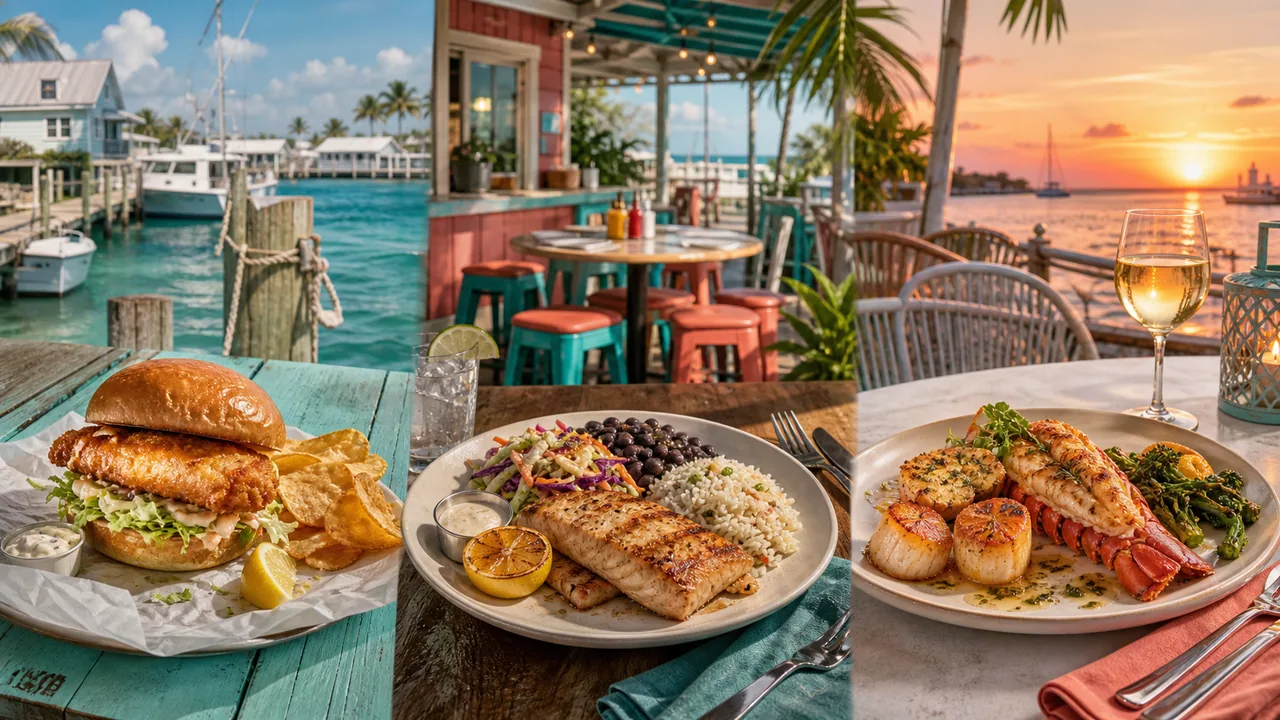
The best Key West seafood answer changes with the meal. A counter-service lobster roll, a raw-bar happy hour, a crowded harbor restaurant, and a white-tablecloth dinner should not compete on one list as if they promise the same thing.
Choose the meal before the name: quick lobster roll, raw-bar happy hour, harbor atmosphere, local fish plate, or a quieter dinner. That prevents a famous patio from outranking a better counter-service meal merely because it has more photographs online.
Reservation or walk-in?
Start with party size, meal, and timing
RealReviews' restaurant flow asks for the details a host needs, with contact information saved for faster future requests.
For a casual seafood lunch
Eaton Street Seafood Market works because the market identity matches the meal: order at the counter, focus on fish, and accept limited ceremony. DJ's Clam Shack is another efficient Duval-area stop for fried seafood and lobster rolls.
These are poor choices for a long air-conditioned anniversary dinner and strong choices when food matters more than table service. Reviews should be filtered through that format.
For the raw bar and harbor atmosphere
Half Shell Raw Bar occupies the casual end of the Historic Seaport spectrum. Its appeal is oysters, peel-and-eat seafood, an informal room, and proximity to working boats. Alonzo's offers another harbor raw-bar setting with a more conventional restaurant feel.
Happy-hour claims change. Verify the current day, time, and eligible items directly rather than building dinner around an old social post.
For a large waterfront restaurant
Conch Republic Seafood Company has scale, water views, live energy, and a broad menu. It is a practical mixed-group choice and a recognizable Key West setting. Scale also brings noise, waits, and service variability at peak times.
Book it for the combination of place and menu, not because a large review count proves every dish is best in class. A smaller seafood specialist can outperform it on one item while offering none of the harbor spectacle.
For atmosphere and a famous name
Blue Heaven's courtyard, roosters, music, breakfast, and Key lime pie are the product as much as the plate. The public rating volume shows durable popularity, while local discussions regularly debate whether the food justifies the wait.
Both views can be reasonable. Go when the setting sounds enjoyable even if the meal is not a private discovery. Skip it when waiting in heat would overshadow brunch.
For a polished dinner
A&B Lobster House fits the marina-view special-occasion slot. Compare it with other fine-dining rooms on service, seating, wine, and total price rather than with a shack's sandwich. Request the table type that matters and understand that a reservation may not guarantee a particular view.
Market-price seafood should be priced verbally before ordering. Stone crab, lobster, and whole fish can make two similar-looking meals diverge sharply at the check.
How to order local without believing every claim
Ask what fish is local and fresh that day. “Fresh” does not always mean locally landed, and conch served in Key West is not necessarily harvested in Florida waters. Yellowtail snapper, hogfish, Key West pink shrimp, stone crab in season, and spiny lobster can be locally meaningful choices, subject to supply and regulation.
People with allergies should discuss shared fryers, raw-bar cross-contact, and sauces. Pregnant diners and anyone managing mercury exposure should follow current medical guidance rather than a tourism article.
Local seafood claims need a species and source
Key West branding does not mean every fish on every menu was landed nearby. Ask what is local today, where it came from, whether it is fresh or previously frozen, and how the kitchen identifies substitutions. Responsible answers may change with season, regulation, weather, and supply.
Stone crab, spiny lobster, grouper, snapper, shrimp, oysters, and conch have different seasons, origins, and rules. A restaurant can serve an excellent imported or frozen product when it describes it honestly. The useful distinction is disclosure, not a romantic assumption.
Match preparation and setting to the meal
Raw bars, fish markets with counter service, marina restaurants, Cuban kitchens, and fine-dining rooms should not be ranked from one generic seafood standard. Decide whether the group wants oysters and drinks, a fried basket, a blackened sandwich, a whole fish, a tasting menu, or a polished dinner.
Then compare wait, seating, heat, noise, reservations, portion, sides, and total price. A waterfront premium can be worthwhile when the view is part of the evening. It is wasted when the party must rush inside before a fixed departure.
Allergies and raw-shellfish risk require direct answers
Seafood allergy questions cannot be resolved by a menu icon or review. Contact the restaurant about shared fryers, grills, utensils, sauces, shellfish steam, and its ability to prevent cross-contact during the intended service. Diners at increased risk from raw shellfish should follow current health guidance.
Groups with mixed diets should inspect the current menu rather than assuming every seafood restaurant has substantial vegetarian or children's choices. Ask about substitutions before joining a long wait.
A useful seafood value comparison
Compare market price, portion, included sides, drinks, service charge, gratuity, parking, and reservation certainty. Counter service can offer strong food value without a harbor table; a tasting format may include several courses and occupy the entire evening.
Read recent reviews by meal period and ordered item. Repeated comments about temperature, preparation, pacing, or disclosure matter more than vague declarations that a place is touristy. RealReviews attributes outside ratings rather than manufacturing one cross-platform score.
Keep a three-option plan: preferred reservation, nearby walk-in, and fast fallback. Weather, waits, sold-out dishes, and delayed tours can then change the meal without ruining it.
Restaurant-by-restaurant fit without a false universal winner
Half Shell Raw Bar works when the group wants oysters, peel-and-eat seafood, drinks, and the active Historic Seaport. Eaton Street Seafood Market is better suited to a quick counter meal or a traveler who values market identity over table service. Conch Republic provides a larger harbor restaurant with broad appeal for groups. Little Pearl belongs in a separate special-dinner comparison because its compact room and structured multi-course format solve a different occasion.
Blue Heaven is not primarily a seafood specialist, yet seafood dishes appear within a destination courtyard experience. El Siboney can satisfy a diner seeking Cuban preparations and generous familiar plates rather than a raw bar. The useful shortlist begins with format and location; only then should individual dishes and ratings decide.
Reservations, market prices, and sold-out items
A current online menu is a planning tool, not an inventory guarantee. Daily catch, oysters, lobster, and specials can sell out or change. Ask about the item that motivates the visit before accepting a long wait. When a price is listed as market, request the amount and portion before ordering; staff should be able to state it clearly.
For an important dinner, reserve where possible and save the cancellation rule. Walk-in restaurants need a maximum-wait plan and nearby alternative. Historic Seaport, Duval, and Bahama Village restaurants create different parking and walking problems, especially during events or after a boat returns.
A two-meal seafood strategy
Instead of forcing every seafood goal into one expensive dinner, use a counter-service lunch for a sandwich or simple plate and a separate evening for raw bar, waterfront atmosphere, or a tasting menu. This makes comparisons fairer and reduces the temptation to order a famous item that does not fit the restaurant.
Leave one meal uncommitted until weather and appetite are known. A heavy fried lunch may be wrong before a rough-water excursion; raw shellfish may be unwise for a medically vulnerable diner; a long tasting menu may conflict with sunset. The best plan treats food as part of the day's logistics rather than a disconnected ranking exercise.
Families should compare high chairs, children's portions, restroom access, noise, and the likelihood of a wait in heat. A broad menu helps only when the kitchen can serve the needed items at that meal. Groups should ask whether everyone must be present, whether checks can be split, and when automatic gratuity begins.
Accessibility includes the route from curb or parking space to table, not merely an entrance symbol. Historic buildings, docks, ramps, narrow aisles, and high-top seating can create barriers. Describe the mobility need and request a specific seating arrangement before traveling to the restaurant.
Sustainability claims deserve the same specificity as local claims. Ask about species, sourcing, seasonal availability, and substitutions instead of assuming every menu label reflects a verified practice. NOAA and state advisories can help consumers understand protected species and current fishery rules, while the restaurant remains responsible for describing what it sells.
Finally, treat correction as part of the research process. Menus, chefs, ownership, hours, and reservation platforms change. Use RealReviews profiles and guides to narrow the decision, then verify volatile details with the restaurant. If a sourced fact is wrong, the correction path is more useful than repeating an outdated claim across another list. Save the direct confirmation for an important reservation, especially when dietary safety, accessibility, or a fixed event depends on that meal.
Use the regulated record for safety, not taste
Florida's inspection database can show public food-service inspection history. It cannot tell you which grouper sandwich tastes best, and a review score cannot replace the regulated record. Use each source for its proper job: the restaurant for current menu and sourcing claims, the state for inspections, and attributed reviews for recurring service and execution patterns.
For raw shellfish, pregnancy, immune compromise, or a serious allergy, follow appropriate medical guidance and ask the restaurant direct preparation and cross-contact questions. Popularity is not a safety exception.
Sources and verification
Rules and public requirements link to the responsible agency. Business-specific service claims are checked against privately retained official material, while public ratings remain attributed to their original source. RealReviews does not turn outside reviews into invented testimonials, blend unrelated platforms into a house score, or sell placement in these comparisons. Recheck licenses, availability, scope, and price before hiring.
Frequently asked questions
Where should I eat casual seafood in Key West?
Choose Eaton Street Seafood Market for a fish-market counter meal and DJ's Clam Shack for a quick lobster-roll or fried-seafood stop. Both make more sense than paying for a harbor table when food and speed are the priorities. Check current hours and sold-out items, then compare the complete meal rather than treating counter service as automatically cheap.
Which Key West seafood restaurant has a harbor view?
Conch Republic and Half Shell Raw Bar are the strongest casual Historic Seaport choices; Alonzo's adds a broad marina setting, while A&B Lobster House is the more polished dinner format. Choose by occasion and menu first, then decide whether the harbor view justifies the price and wait for your group.
Is all conch in Key West locally caught?
No. Queen conch harvest is prohibited in Florida, so a culturally Key West conch dish should not be assumed to contain locally harvested conch. Ask the restaurant for the product's origin and whether it is fresh or frozen; local culinary identity and local catch are different claims.
How can I tell whether seafood is local in Key West?
Ask for the species, landing region, and whether it arrived fresh or previously frozen that day. A useful answer sounds like Florida Keys yellowtail snapper from a named supplier, not simply fresh local fish. Season, weather, regulation, and supply change, so menu branding and waterfront location do not establish origin.
What should someone with a seafood allergy ask?
Ask whether the intended service can avoid shared fryers, grills, utensils, cutting surfaces, sauces, and shellfish steam, then describe the allergen and severity directly to the person responsible for the kitchen. A menu icon or server reassurance is not a cross-contact plan. If the kitchen cannot explain its controls, choose another restaurant.