
Key West night-tour comparison
Key West Ghost Tour Reviews: Trolley, Walking Tour, or Robert the Doll?
Compare Ghosts & Gravestones, walking history tours, pub crawls, and Robert the Doll After Dark by scares, history, walking, age, and location.
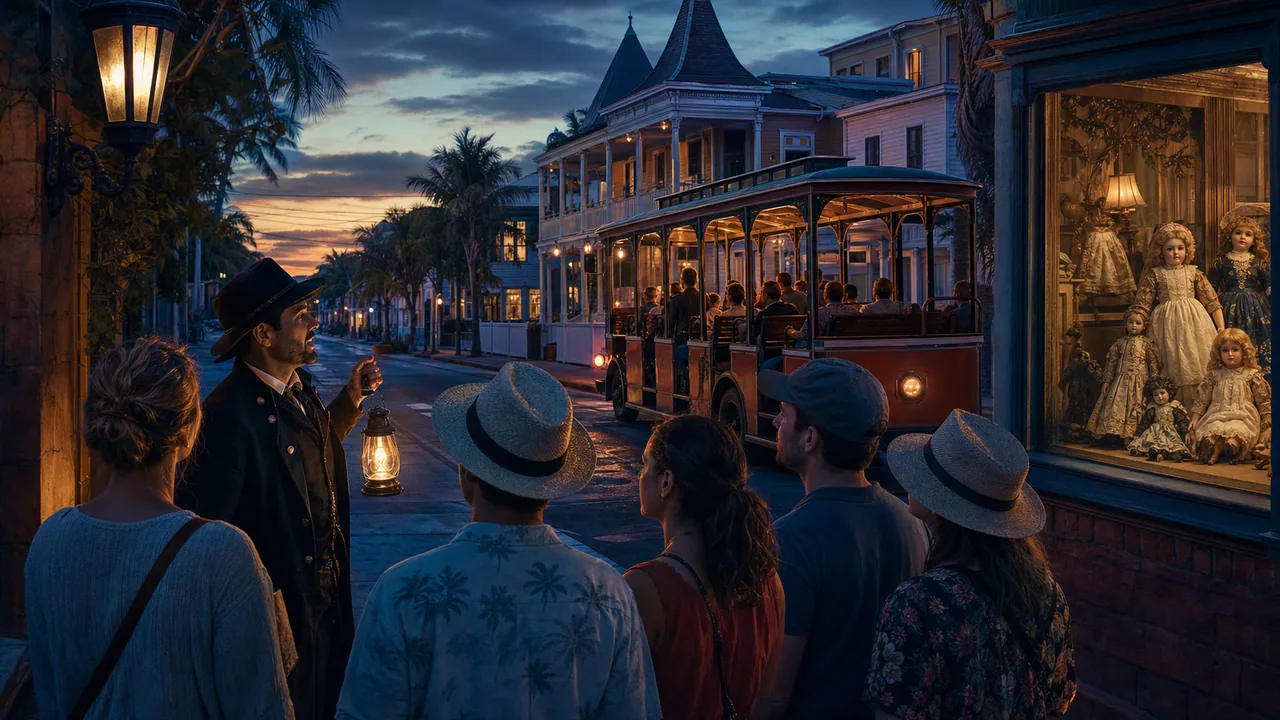
Book the trolley for a staged ghost show with less walking, a small walking tour for guide-led history, a pub crawl for a social night, and Sloan's after-dark Fort East Martello program when Robert the Doll is the reason for going. These are not interchangeable versions of one attraction.
Going for Robert the Doll? The ticket must name Fort East Martello or Sloan's night program. The standard Ghosts & Gravestones trolley does not enter the fort.
Choose the night you actually want
Compare the trolley, a walk, a pub crawl, and the fort
Name the ages in your party, any trouble with steps or standing, and whether Robert the Doll is the point of the night. That is enough to eliminate the wrong tickets.
Read the product name before the ghost story
Ghosts & Gravestones is selling a trolley show. The vehicle, costume, script, and crowd are part of the purchase. Calling it “hokey” says more about the reviewer's taste than the ride unless the review also explains what went wrong. The seat cuts the amount of walking; it does not cover the trip to check-in, the boarding steps, exits at stops, or the walk after the tour. A guest who can manage one short walk but not four separate boardings needs that stop procedure in writing.
A walking ticket puts far more weight on the guide. Look for a recent account that names the guide and says whether the group could hear beside Duval Street traffic. Did questions get real answers? Did the guide connect a story to the building in front of the group? That is useful evidence about one departure. It is not a promise that the same guide will lead next Tuesday's tour.
Pub-crawl tickets buy a bar night as well as a tour. Service noise and drink orders interrupt the guide. Before paying, find the venue count, the drink inclusion, and the rule for nondrinkers. Budget for the ride home. If those facts make the history feel secondary, choose the walk.
Robert the Doll is at Fort East Martello, on South Roosevelt Boulevard—not on the standard Old Town trolley route. The museum publishes daytime visitor information. Sloan's sells the separate after-dark program inside the fort. Sloan's excludes infants, advises against bringing children under ten, and asks guests who need parking or accessibility arrangements to make contact in advance.
A worked choice: history, Robert, or a show
Take a family with a twelve-year-old and an adult who cannot stand or walk for ninety minutes. They are not interested in paranormal equipment. The trolley belongs on the shortlist, but “less walking” does not finish the accessibility check. The family still needs the boarding step, wheelchair procedure, required exits, nearest restroom, parking-to-check-in distance, and final stop. A fixed seat is helpful only if the guest can reach it and use every required stop.
Change the group to two adults who care about Key West history and want questions welcomed. A small walking tour now has the advantage. They should compare the guide's cited sources, maximum group size, use of amplification, actual route, building access, and whether folklore is labeled. Paying for private guidance may buy control over pace and emphasis. It does not open closed property or create admission that the operator does not hold.
If the same travelers are going because of Robert, neither of those comparisons solves the request. They need the Fort East Martello product or a daytime museum visit. An Old Town operator can tell a Robert story from the sidewalk or trolley without entering the museum. The reservation should name the fort experience, address, admission, age rule, and start point.
Old Town after dark changes the physical tour
Distance alone understates a walking route. Historic Old Town brings uneven sidewalks, curbs, heat, rain, crowds, darkness, and nightlife noise. Ask for approximate standing time as well as mileage. Stairs, interior stops, bathroom opportunities, and the gap between the final stop and the starting point may matter more than the advertised duration.
A stationary fort program avoids a cross-town walking route but introduces different grounds and interior surfaces. A trolley removes most continuous walking but keeps the trip from the car or lodging to the seat. The useful description is a chain: arrival, boarding, stops, restrooms, finish, and return transportation. “Accessible” without that chain is too vague for a purchasing decision.
Pin the check-in desk and the final stop separately. They may not be the same place. At the end of a late tour, even a few Old Town blocks matter when the car is in a closing garage or the last convenient ride has gone.
Ask where the story came from
An archived name may be genuine while the attached haunting is much newer. Good guides say so. They give the dated fact, identify the disputed version, and call folklore folklore. A museum label, archive, book, marker, or primary record gives the listener somewhere to check. A conflict between sources is information, not an inconvenience to hide.
The trolley promises a performance, not a supernatural result. A fort investigation promises the named location, its advertised equipment, and time to participate. Check whether guests may handle the equipment and whether the ticket enters the building; hearing its story outside is a different product.
A skeptic and a believer can still compare notes about the same night: Was the guide audible? Was the route handled safely? Could the advertised sites be entered? Did the guide distinguish a record from a legend?
Read complaints by product and date
Low and middle ratings become useful when they identify a departure, guide, route, group size, and failure. An inaudible guide, overcrowding, a late start, an unexpected route change, or a confusing meeting point can be compared across recent accounts. “Not scary” may instead reveal a mismatch between a guest and a history-led product. “Too theatrical” may describe the advertised trolley format rather than an execution failure.
Date the itinerary as well as the review. Older trolley accounts sometimes describe a Robert stop that the current ticket does not include. One late departure describes one night; a cluster of recent late departures on the same named product warrants a direct question. Keep pub-crawl complaints with the pub crawl and fort complaints with the fort.
A past guest can name an excellent guide. The next buyer can request that person, but cannot assume the assignment. “Amazing” is nearly empty without something about the guide's voice, pace, research, or response to questions.
Find the scene most likely to upset a child
Ignore the phrase “family friendly” until the operator describes the hardest scene. A reference to violent death is different from a jump scare, a loud effect, sexual material, darkness, or being pulled into the performance. The trolley can be more intense than a quiet walk even though everyone is seated. Timing matters too; acceptable material can still make for a miserable two hours after bedtime.
Adults can dislike the tone for opposite reasons. A history reader may hate campy jokes; someone chasing a spooky show may hate a lecture. Ask for one example from the performance. The answer is more useful than a rating on a vague scary-to-historical scale.
What does the more expensive ticket add?
Look for the extra item: fort or museum admission, a smaller group, private control of the pace, transportation, more time, or equipment. When both tours stay outdoors on similar Old Town streets, compare the checkout totals. Tax, booking charges, photographs, drinks, and gratuity can reverse the advertised price order. A private booking still cannot enter property the guide lacks permission to use.
Museum and private-property rules may limit photography. Pub-crawl math includes drinks and a safe ride afterward. A lower ticket price is no bargain when it leaves out the site or activity that caused the traveler to book.
Keep the confirmation, not only the receipt. It should preserve the check-in deadline, stated duration, start and finish addresses, cancellation language, and weather rule. Light rain may leave the tour unchanged; lightning or flooding may force a different route or cancellation. The policy must treat an operator cancellation separately from a guest who decides not to attend.
Save the operator's phone number with the booking. If the guide is late or the meeting point is unclear, a timestamped call or message creates a record. Do not put a tight dinner reservation, cruise departure, childcare deadline, or garage closing immediately after the advertised finish; moving a group through Old Town can add time.
What to put in a useful review
Record the date, exact product, guide, approximate group size, route, and sites entered. Then describe audibility, pacing, historical labeling, access, age guidance, and the handling of weather or another disruption. This lets the next traveler compare like with like.
A paranormal observation can be reported as the reviewer's experience without being presented as repeatable proof. A skeptic can also review the service fairly without accepting the premise. The strongest review tells readers what was purchased and what was delivered.
Sources and verification
Current format, location, age, parking, and access claims come from the operators and museum linked below. The Key West history resources help separate documented people and places from later storytelling. Outside reviews remain attributed to their original platforms; RealReviews does not turn them into a house rating or treat a paranormal report as repeatable evidence.
Frequently asked questions
Which Key West ghost tour visits Robert the Doll?
Sloan's Robert the Doll After Dark experience enters Fort East Martello. The standard Ghosts & Gravestones trolley does not currently visit Robert.
Are Key West ghost tours good for children?
Yes for many school-age children who enjoy theatrical history, but choose the product by its actual scare level. Sloan's says its Robert the Doll experience is not recommended for children under 10 and does not permit infants; a broader trolley or walking tour can be the better family format when entering Fort East Martello after dark is too intense.
What happens if it rains?
Most tours continue in light rain. A walking guest should arrive with rain protection. Lightning, flooded streets, or another unsafe condition can change the route, delay departure, or cause the operator to cancel. Check the current refund terms before booking; deciding not to attend is not necessarily treated the same as an operator cancellation.
Are Key West ghost tours historically accurate?
No. Not every tour—and not every story on the same tour—is historically accurate. A guide can document the person or building while treating the haunting as folklore. Look for a date and a named source: an archive, museum, book, marker, or primary record. The trolley may succeed as theater even when its script is not a historical citation.
Which ghost-tour format is best for limited mobility?
The trolley is usually the first format to check because it removes most continuous walking. Before booking, get the parking-to-check-in distance, boarding-step details, wheelchair procedure, required exits, restroom access, and final stop. Fort East Martello avoids a long Old Town route, but its grounds and interior surfaces require a separate accessibility confirmation.