
Key West sightseeing comparison
Old Town Trolley vs. Conch Tour Train: Which Key West Tour Fits?
Compare Key West's Old Town Trolley and Conch Tour Train by route, stops, duration, heat, mobility, cruise-port use, and value.
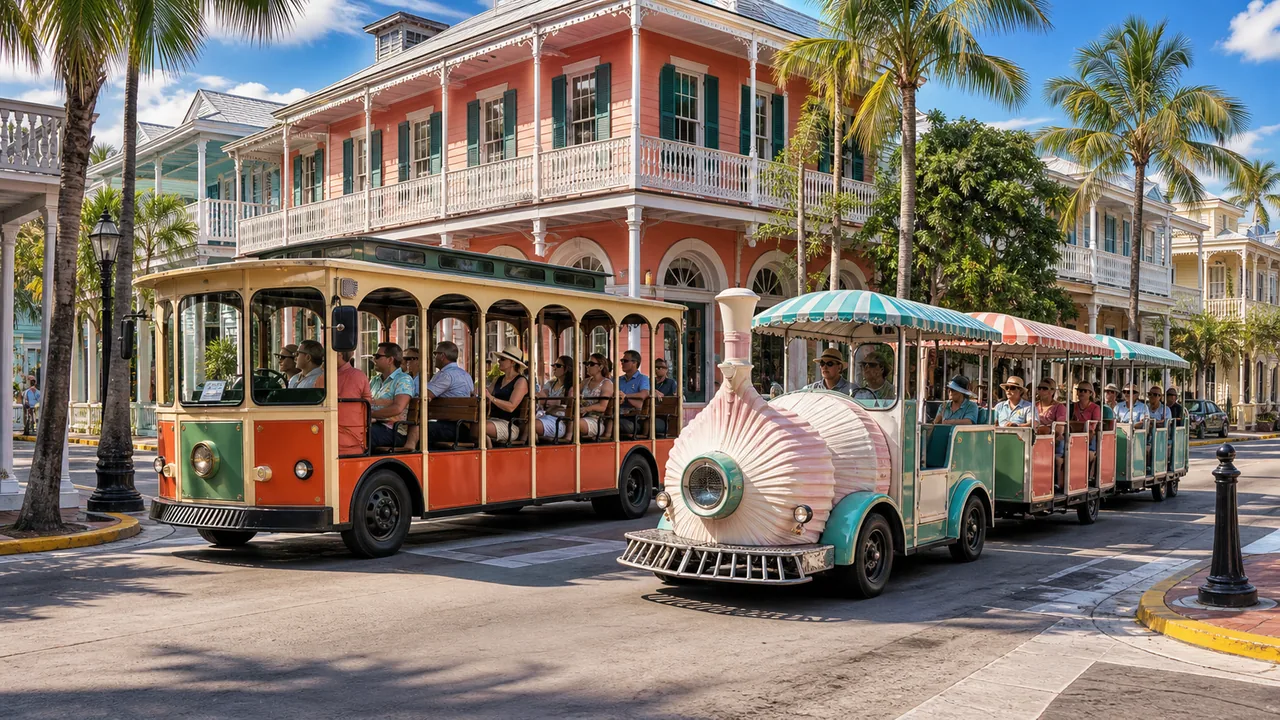
The trolley and train are often treated as interchangeable narrated rides. They are not. Old Town Trolley is transportation-shaped sightseeing: a roughly 90-minute loop with 13 stops and all-day reboarding. Conch Tour Train is a shorter, continuous Old Town orientation that returns to its Front Street depot.
The better ticket depends on whether you want to move around the island or sit down for one compact history tour.
Build the day around your stops
Compare nearby attractions before choosing the route
Start with the places you genuinely want to enter, then pay for the tour that connects them instead of buying a loop first.
The format difference in one minute
Old Town Trolley's official FAQ describes a 13-mile, 90-minute narrated loop with 13 stops, free reboarding, and typical service every 20 to 30 minutes. Remaining aboard gives an overview; getting off turns it into an all-day transit plan.
Conch Tour Train's current site describes a 60-minute Old Town loop beginning and ending at 303 Front Street, with departures about every 30 minutes. It is the simpler commitment and the less flexible transportation tool.
Choose the trolley for an attraction day
The trolley makes sense when the group wants the Southernmost Point, Truman Little White House area, waterfront, and other separated stops without repeatedly arranging rides. The narration continues between stops, so transit becomes part of the activity.
The weakness is waiting. The operator notes that a seat on the next trolley is not guaranteed during peak periods. If you leave the vehicle for twenty minutes and then wait another twenty, the all-day freedom can become an inefficient schedule.
Choose the train for one contained overview
The Conch Tour Train works well on the first morning, for a cruise passenger with a defined window, or for a group that wants to listen without deciding where to reboard. Its route emphasizes Old Town streets and history rather than functioning as an island shuttle.
The continuous format is also its limitation. If a sight catches your attention, you generally note it for later instead of turning the stop into a visit. Travelers expecting hop-on, hop-off freedom should not buy it based on the word “tour” alone.
Heat, rain, children, and mobility
Both are open-air experiences, so shade direction, wind, rain, and seat location influence comfort. Midday summer heat can make a continuous ride tiring; an early departure usually improves the experience. Carry water and do not assume motion creates enough cooling at every stop.
Families may prefer the trolley's ability to take breaks, but repeated boarding with a stroller can be work. Travelers with mobility equipment should ask the operator about the exact vehicle and loading process, not rely on a general accessibility label.
Cruise passengers should work backward from all-aboard
A cruise-day visitor has less margin for waiting. The train's fixed loop is easy to budget, while the trolley covers more but can strand time in stop queues. Whichever you choose, finish near the port well before the ship's deadline and confirm whether the cruise sells the same product with a markup or added terms.
Booking direct can be cheaper, but port-day guarantees and cancellation rules may differ. Compare the actual protection, not just the ticket face value.
Our verdict by traveler
First-time visitor with a full day: trolley. Cruise passenger wanting one orientation: train. History fan who plans to walk afterward: train. Family visiting several paid attractions: trolley. Traveler staying near Duval who only needs rides: neither; use a local transit or taxi plan.
Make the choice from your actual stopping plan
Write down the attractions the group will enter and the time each needs. Hop-on flexibility matters only when the stops match that list and service remains frequent enough to continue. A continuous narrated loop can be better when orientation and resting are the goal.
Confirm the current route, first and last departures, stop locations, accessibility, stroller handling, and whether a complete loop is guaranteed near closing. Weather, traffic, events, and cruise congestion can change timing.
Price the whole party and day
Compare current adult and child totals, taxes, multiday validity, included admissions, and cancellation terms. Then add the opportunity cost of waiting at stops. A higher fare can be worthwhile if it replaces rides and serves planned attractions; a cheaper loop can win when nobody intends to disembark.
Families should ask about boarding with sleeping children, folded strollers, restrooms near stops, and shade. Mobility users need vehicle-specific answers rather than a general accessibility label. Save the route map and final pickup locations offline.
The products are organized around different days
Old Town Trolley is built around repeated boarding. Its value comes from using the route as transportation between included stops while hearing commentary on each segment. Conch Tour Train is closer to a narrated overview with a defined circuit and limited breaks. A traveler who wants one continuous orientation can prefer the train; a traveler who intends to visit several dispersed attractions can extract more value from hop-on, hop-off access.
That distinction matters more than vehicle styling. Count the stops the group will actually use, the walking saved, and the time likely spent waiting to reboard. If everyone plans to remain seated for a complete loop, compare narration, route, shade, vehicle access, and total duration instead of paying for unused hop-on privileges.
Boarding, wheelchairs, strollers, and heat
Ask the operator about the exact mobility device, transfer ability, stroller, and boarding location before purchase. A vehicle described as accessible may require advance notice or have limited securement capacity. The useful question is not whether the company welcomes disabled guests; it is whether this departure and stop pattern work for this person and device.
Both experiences are exposed to Key West weather at stops and on open-air portions. A midday loop can be substantially hotter than a morning departure. Bring water, sun protection, and a rain plan, and avoid building an inflexible reservation immediately after the scheduled finish. Traffic, boarding, and questions can extend the outing.
How to compare the actual ticket total
Use the operator checkout for the same date and party. Record adult and child tickets, taxes, any online discount, refund terms, operating hours, last complete loop, and whether a second day is included or discounted. Do not compare a promotional starting price with another company's final total.
Then price the alternative. For a party staying centrally, a self-guided walk plus one taxi may cost less. For a cruise passenger with limited hours, paying for a broad loop that cannot be completed may be poor value. For a first-time visitor with mobility limits, narrated transport can be the most efficient part of the day even when it is not the cheapest line item.
A practical choice by traveler type
Choose the trolley when the group wants to leave the vehicle at several named stops, cover more of the island, and resume later. Choose the train when a mostly continuous historic overview is the goal and the scheduled route fits the available window. Choose neither when the group already knows Old Town, wants a deep specialist history tour, or will spend the day within a few walkable blocks.
Before paying, list three intended stops and one hard deadline. Check the current route map, service notices, reboarding rule, and last useful departure against that plan. This simple test exposes most mismatches that a generic best-tour ranking misses.
Narration quality and route coverage are not the same thing
Both companies sell narrated sightseeing, but a route map cannot show whether a particular guide distinguishes documented history from a colorful anecdote, speaks clearly, or adapts to the audience. Recent reviews are most useful when they name the guide, departure, audibility, pacing, and specific subjects covered. A generic five-star sentence adds little.
If deep history matters, use the loop as orientation and pair it with a museum, historic-marker walk, or specialist tour. A broad vehicle tour must keep moving and cannot fully explain every structure it passes. If entertainment matters more, a lively guide can be a strength even when the commentary is less exhaustive.
Cruise-day and overnight-guest strategies differ
A cruise passenger should work backward from the all-aboard time and identify the last stop from which walking directly to the ship remains practical. Do not plan around the final advertised loop when one delay would consume the buffer. A continuous train circuit early in the day can provide orientation without repeated boarding risk.
An overnight guest can use a trolley more deliberately: complete a loop first, note actual travel times, then use later segments for two or three attractions. Verify whether the ticket remains valid on a second day and whether that benefit is included in the purchased fare rather than a temporary promotion.
Families should decide whether repeated boarding will become an attraction or a chore. A child who enjoys narration may value the continuous train; another who needs frequent breaks may benefit from trolley stops. Confirm child-ticket ages, stroller storage, food rules, restroom opportunities, the policy for a missed reboarding, the final useful departure, any event-day detour, and rain-service changes in writing instead of inferring them from a family-friendly label.
Rain does not affect every seat equally
Ask what weather protection the vehicle provides and whether service continues during ordinary rain. Wind-driven water, wet benches, heat, and glare can vary by row. If the forecast is poor, understand the operator's cancellation rule before opening or activating the ticket. Bring a compact layer rather than blocking aisles with large umbrellas or bags.
Sources and verification
Rules and public requirements link to the responsible agency. Business-specific service claims are checked against privately retained official material, while public ratings remain attributed to their original source. RealReviews does not turn outside reviews into invented testimonials, blend unrelated platforms into a house score, or sell placement in these comparisons. Recheck licenses, availability, scope, and price before hiring.
Frequently asked questions
Can you hop on and off the Conch Tour Train?
No. The standard Conch Tour Train is a continuous narrated loop of about 60 minutes; Old Town Trolley is the product designed for repeated boarding at 13 advertised stops. Choose the train when you want one compact overview and the trolley when you want transportation between attractions during the day.
Which tour covers more of Key West?
Old Town Trolley covers more of the island through a roughly 90-minute loop and 13 advertised stops, including areas beyond the train's tighter Old Town orientation. Conch Tour Train concentrates its continuous approximately 60-minute ride on historic central Key West. The trolley is the coverage choice; the train is the simpler compact overview.
Which is better for a cruise stop?
Choose Conch Tour Train for a short port call when one continuous hour leaves a generous ship-return buffer. Choose Old Town Trolley only when the port window is long enough to use multiple stops without watching the clock at each reboarding. Set a personal final boarding time well before the ship's deadline; neither operator controls a missed cruise departure.
Which is better for someone who does not want to walk much?
Old Town Trolley is usually better for reducing total walking because its 13-stop route lets riders use the vehicle between attraction areas. The Conch Tour Train reduces walking during its continuous one-hour overview but generally returns riders to the depot rather than functioning as all-day transport. Mobility still depends on the boarding step and the distance from each stop to the intended entrance.