
Key West transportation review guide
Key West Express Reviews: Is the Ferry Worth It?
A source-checked Key West Express review guide covering travel time, seating, seasickness, fares, luggage, parking, and who should take the ferry.
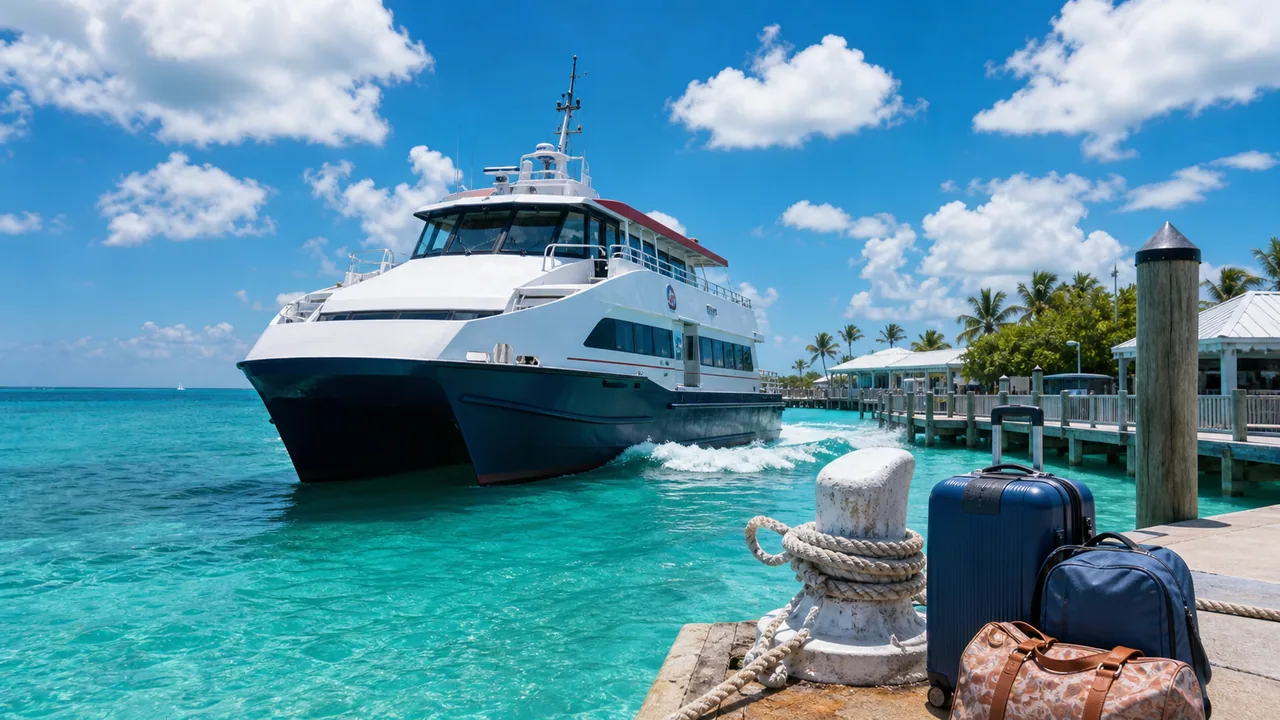
Key West Express solves a specific Florida problem: reaching Key West from Southwest Florida without driving across the peninsula and down the Overseas Highway. It is a high-speed passenger ferry, not a cruise and not a vehicle ferry. The operator runs from Fort Myers Beach year-round and Marco Island seasonally, with return service from the Key West ferry terminal.
Use Key West Express when avoiding the drive matters more than controlling departure time and sea exposure. Sea conditions, boarding position, fare rules, and the shape of the itinerary can turn the same service into either the easiest part of a trip or a long, uncomfortable day.
Plan the crossing
Compare the ferry with the trip you would otherwise take
Use current sailing dates, party details, luggage, vehicle needs, and cancellation terms rather than deciding from a headline fare.
What the trip actually involves
The operator advises planning on about three and a half hours between ports, with actual time affected by weather and sea conditions. Fort Myers Beach departures are scheduled year-round; Marco Island service is seasonal. The cabin is climate controlled, with an outside sun deck and food and drinks available for purchase.
That is substantially different from driving, but it is not a short harbor ride. Check-in and boarding add time at both ends. A traveler who expects a quick water taxi is likely to judge the experience harshly even if the vessel runs exactly as scheduled.
What favorable reviews consistently value
The strongest positive theme is relief from the drive. Passengers can sit, walk around, buy a drink, and arrive near the Historic Seaport instead of managing traffic and parking all the way down the Keys. Recent Tripadvisor reviews also praise a clean vessel, varied indoor and outdoor seating, and helpful crew.
The value improves on a two- or three-night stay because the travel time is spread across a longer visit. It can also be attractive for Southwest Florida residents and visitors who would otherwise backtrack through Miami. The ferry does not carry personal vehicles, so the calculation is different for anyone who needs a car after arrival.
The complaints that should change how you prepare
Motion sickness is the biggest uncontrollable variable. A calm outbound crossing does not promise a calm return. People with a known sensitivity should discuss medication with a pharmacist or clinician before travel, follow the product directions, eat appropriately, and choose fresh air or a horizon view when possible.
Seating and boarding are the second recurring issue. Reviews describe better choice for early arrivals and a distinct boarding-group process for the Key West return. Do not rely on a recollection from an older review: confirm the current procedure with the operator and arrive by the published required boarding time.
The third issue is fare flexibility. The discounted advance fare is cheaper but non-refundable; according to the operator, remaining value may be held for future travel for two years when plans change. Full fares have different refund treatment, and per-person change or cancellation fees can apply. The cheapest headline price is not automatically the best value for a weather-sensitive itinerary.
Fares, luggage, and parking details people miss
Use the operator’s fare page for the date you are actually traveling because published fares change. Compare the final cost for every passenger, parking at the departure port, transportation in Key West, and any hotel night required by the schedule.
The current luggage terms permit two carry-ons per passenger, each no larger than 22 by 14 by 9 inches. Oversized pieces within the operator’s stated limit incur a fee, and larger items can be prohibited. That is more restrictive than arriving in your own car with an open trunk.
Fort Myers Beach has operator parking for a daily fee. Marco Island advertises complimentary parking across from the marina. Key West does not have dedicated Key West Express parking; the operator points travelers toward the city garage across from the terminal. Verify these arrangements when booking because port rules and prices can move.
Who should book it—and who should drive
Book the ferry when your trip begins in Southwest Florida, you want at least a couple of nights in Key West, nobody needs a vehicle on the island, and the group is comfortable with a marine crossing. It is especially rational when avoiding a long drive has real value for the driver.
Drive when the Overseas Highway is part of the vacation, you need to stop throughout the Keys, you have substantial luggage or gear, or schedule flexibility matters more than relaxing during transit. A family of several people should compare the full ferry total against fuel, tolls, parking, and the value of the driver’s time—not against fuel alone.
For a one-day visit, calculate honest usable hours after check-in and boarding. The ferry can make a memorable day trip, but it is a poor fit for someone expecting an unhurried island day plus seven hours of water travel.
Compare door-to-door time, not scheduled crossing time
The useful clock starts when the traveler leaves the mainland lodging or home, not when the ferry moves from the dock. Add the drive to the terminal, parking, required check-in margin, boarding, the crossing, unloading, and the transfer from the Key West terminal to the final hotel. Do the same for driving through the Keys or flying, including security, rental-car handling, and airport transfers. A ferry can be longer on the water and still simplify the trip; it can also consume most of a day when the terminal is far from the starting point.
The return deserves its own calculation. A fixed departure creates certainty but removes flexibility if weather, illness, or a changed itinerary makes the traveler want to leave earlier. Do not schedule a same-evening flight or other hard connection from the mainland without a large buffer and a clear understanding of delay risk.
Luggage, parking, and onboard spending change the total
Read current baggage dimensions, quantity limits, prohibited items, bicycle rules, and handling terms before packing. A hotel stay, fishing trip, or family visit can create luggage needs that a simple day-trip review never tests. Confirm whether items remain accessible during the crossing and label anything checked according to the operator's instructions.
Add terminal parking, ground transportation at both ends, food and drinks, upgraded seating if offered, and the cost of changing or missing a sailing. Then compare that total with fuel, tolls, vehicle wear, rental costs, airfare, and transfers for the alternative. The ferry's value often comes from avoiding a long drive rather than from having the lowest bare ticket.
A practical go or no-go checklist
Choose the ferry when the mainland terminal is convenient, the sailing day fits the schedule, the party can tolerate a marine crossing, and not bringing a car makes sense in Key West. Driving may win when the group needs a vehicle, carries substantial equipment, begins far from the terminal, or wants flexible arrival and departure times. Flying may win for a short trip when time matters more than price.
Before the cancellation deadline, verify sailing status, check-in time, identification, parking instructions, luggage, mobility assistance, pet policy, seating, and motion-sickness planning. Save the reservation and terminal directions offline. Weather can affect any transport mode, so keep the first expensive reservation in Key West flexible enough to absorb a late arrival.
Sources and verification
Rules and public requirements link to the responsible agency. Business-specific service claims are checked against privately retained official material, while public ratings remain attributed to their original source. RealReviews does not turn outside reviews into invented testimonials, blend unrelated platforms into a house score, or sell placement in these comparisons. Recheck licenses, availability, scope, and price before hiring.
Frequently asked questions
How long is the Key West Express ride?
The operator says to plan on approximately 3.5 hours between ports. Weather and sea conditions can change the actual travel time.
Can the Key West Express carry my car?
No. It is a passenger ferry, so travelers arrange parking at the departure terminal and use local transportation after arriving.
Is Key West Express good for a day trip?
No for most travelers. The round trip consumes roughly 7 hours of scheduled sailing plus check-in, boarding, unloading, and mainland-terminal travel, leaving a narrow and delay-sensitive Key West visit. It makes more sense for at least one overnight unless the sailing schedule creates a verified full-day window and the traveler accepts the long transit-to-visit ratio.
Do I need a car after taking Key West Express?
No for an Old Town-centered stay. The ferry arrives near the Historic Seaport, and central dining and attractions are walkable or reachable by taxi, rideshare, bicycle, or local transit. Arrange a car only for outer-island lodging, mobility needs, substantial equipment, or travel beyond Key West; compare that need against driving from the mainland before buying the ferry.
What should I avoid booking after the return ferry?
Avoid a tight flight, cruise, or nonrefundable connection. Marine operations and unloading can run later than the published schedule.