
Key West day-trip review guide
Dry Tortugas Ferry Reviews: Is Yankee Freedom Worth the Full Day?
An honest Yankee Freedom review guide covering the schedule, seasickness, included meals and gear, ferry versus seaplane, and who should skip it.
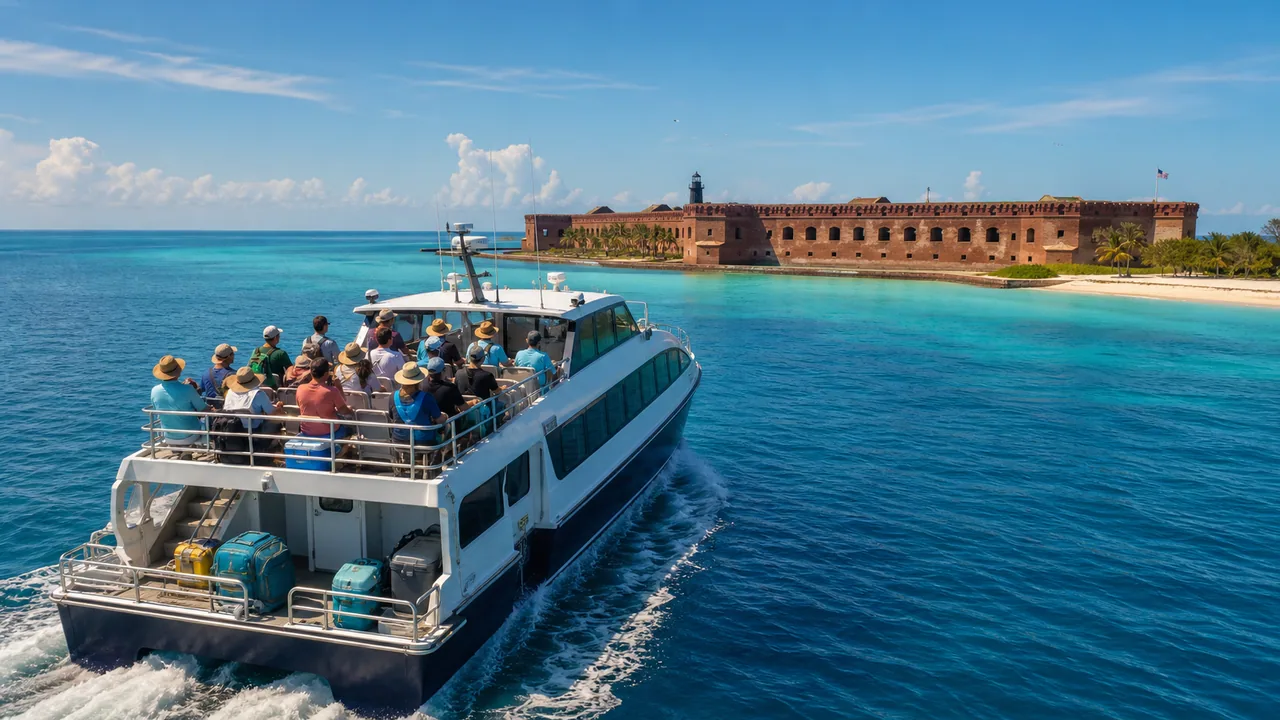
Yankee Freedom is not merely transportation. It consumes most of a vacation day, carries you about 70 miles west of Key West, and determines how much time you have at Fort Jefferson. The destination can be extraordinary while the crossing is miserable for a motion-sensitive passenger; both statements appear in traveler feedback.
Choose the ferry when the group accepts an early departure, a full-day commitment, and possible open-water motion in exchange for the official same-day connection to Fort Jefferson. Travelers who cannot tolerate that crossing should evaluate seaplane availability or change the itinerary rather than judging the park by the boat ride.
Before you commit a day
Compare the ferry profile and current traveler signals
Check the source-linked Yankee Freedom business page, then confirm live availability and cancellation terms with the operator.
The real itinerary
The published day-trip schedule calls for 7:00 a.m. check-in, 8:00 departure, arrival near 10:15, a 3:00 p.m. departure from Garden Key, and return around 5:15. Weather can move those times. Your usable park visit is therefore under five hours, and the trip is not compatible with an evening plan that cannot tolerate delay.
The fare includes a light breakfast, lunch, snorkeling equipment, park admission, and an optional narrated fort tour. Bring a photo ID, towel, sun protection, a dry layer, water, and anything required for medication or dietary needs.
Why favorable reviews call it a highlight
The ferry removes nearly every logistical question. Passengers board in Key West, receive meals and gear, and arrive at the main dock beside Fort Jefferson. Once ashore, history, beach time, birdlife, and snorkeling are all within walking distance.
The National Park Service confirms that ferry, seaplane, and private boat are the ways to reach the park. For a first visit without aviation costs or boating experience, the ferry is the most legible option.
Seasickness is not a footnote
A large catamaran is still a boat in open water. Traveler reports range from smooth and comfortable to widespread sickness. The lower deck and horizon strategies may help some people, but they do not cancel sea state or individual sensitivity.
Anyone with a history of motion sickness should consult a pharmacist or clinician before the trip, use medication exactly as directed, and avoid discovering their tolerance on a non-refundable vacation day. Ask the operator how forecast-driven cancellations are handled; do not assume your personal discomfort changes the refund policy.
Ferry versus seaplane versus private boat
The ferry provides the longest structured day and includes the most basics. A seaplane shortens transit dramatically and adds aerial views, but costs more, has tighter baggage constraints, and does not transport campers. A private boat offers control but transfers navigation, weather, fuel, permits, and safety responsibility to the boater.
The ferry is the default choice, not automatically the best one. For a couple with limited Key West time, seaplane cost can buy back several hours. For a family, the ferry's bundled meals and gear may make the value clearer.
Who should think twice
The day is demanding for someone who dislikes early check-in, cannot sit through a long crossing, needs extensive climate-controlled space, or expects resort services on the island. Fort Jefferson has uneven historic surfaces, and shade is limited away from the ferry and fort interior.
Very young children can enjoy the beach but will not understand why the return cannot happen early. Travelers planning to camp need a separate reservation process and far more preparation; the National Park Service describes camping as primitive and notes that ferry space is limited.
How to improve the odds of a good day
Book early, recheck the forecast, sleep before the departure, and pack for sun and spray rather than a restaurant cruise. Decide in advance whether the fort tour or snorkeling is the priority so orientation time does not disappear into indecision.
- Carry photo ID and the exact booking confirmation.
- Bring reef-safe sun protection, towel, dry layer, and water.
- Confirm dietary needs rather than relying on the included lunch.
- Discuss motion-sickness prevention before travel day.
- Leave the evening schedule flexible.
Build the day around the fixed ferry clock
The ferry day begins before departure with check-in and ends only after unloading in Key West. Keep dinner and flights flexible because weather and marine operations can affect return. At the park, decide early how to divide limited time among Fort Jefferson, snorkeling, beach, lunch, and walking; trying to do everything can make the visit feel rushed.
Save the current schedule, terminal directions, identification requirements, and boarding cutoff. Verify what breakfast and lunch contain, whether dietary needs can be handled, and what food may be carried. Park services are limited, so a forgotten essential is difficult to replace.
Prepare for sun, heat, and an isolated park
Bring water capacity, sun protection, a towel, footwear for the fort and shoreline, and necessary medication. Shade and climate-controlled space are limited once ashore. National Park Service alerts should be checked shortly before travel for closures, preservation work, weather, or facility changes.
Snorkeling depends on conditions and ability. Ask where gear is issued, what sizes exist, and whether flotation is available. The ferry fare can include equipment without guaranteeing that snorkeling will suit every passenger or that visibility will match photographs.
The ferry, seaplane, and camping solve different trips
The ferry bundles a long crossing, meals, admission, gear, and a structured visit. The seaplane costs more but reduces transit and adds aerial views. Camping creates an overnight experience while requiring permits, water, food, equipment, and cargo planning. Compare the whole experience rather than ticket prices alone.
For motion-sensitive travelers, the open-water crossing is the deciding constraint. Discuss medication with a qualified professional before travel day and follow crew guidance aboard. A smooth-day review cannot predict another date, and a rough-day report does not mean every sailing is identical.
Review the refund and rebooking rules for operator cancellation, personal cancellation, late arrival, and weather. A scarce reservation can be valuable without being right for a traveler whose health or schedule cannot tolerate the crossing.
Make the park hours usable
Pack so that sunscreen, water, medication, walking shoes, swimwear, towel, and camera are accessible without reorganizing every bag after arrival. Attend the orientation, note the return-to-vessel deadline, and decide whether the fort or water is the first priority. Families should establish a meeting point because cellular service can be limited.
Respect closed areas, wildlife distance, coral, artifacts, and National Park Service instructions. The remote setting is the value of the trip and the reason self-sufficiency matters. Leave enough time to rinse, change, eat, and board without turning the final park hour into a sprint.
Follow crew instructions for boarding time even if another visitor appears to remain ashore.
Treat the ferry and the national park as two linked products
The ferry controls check-in, transport, onboard inclusions, and return timing; the National Park Service controls current closures, permitted activities, and conditions at Fort Jefferson. Check both close to travel. A positive vessel review cannot establish that a specific park area, snorkeling zone, or service will be available on a future date.
Sources and verification
Rules and public requirements link to the responsible agency. Business-specific service claims are checked against privately retained official material, while public ratings remain attributed to their original source. RealReviews does not turn outside reviews into invented testimonials, blend unrelated platforms into a house score, or sell placement in these comparisons. Recheck licenses, availability, scope, and price before hiring.
Frequently asked questions
How long do you get at Dry Tortugas on the ferry?
The published Yankee Freedom schedule gives visitors about 4 hours 45 minutes on Garden Key: arrival is around 10:15 a.m. and departure is at 3:00 p.m. Treat that as one fort visit plus one substantial beach or snorkeling block, not an unlimited park day, and be back at the vessel by the crew's stated boarding deadline.
Are food and snorkeling gear included?
Yes. The Yankee Freedom day trip currently includes breakfast, lunch, snorkeling equipment, the National Park entrance fee, and an optional Fort Jefferson tour. Bring your own refillable water bottle, towel, sun protection, medication, and any prescription mask because an included meal and standard gear do not cover those personal needs.
Is the ferry bad for seasickness?
Yes, it can be a difficult crossing for a motion-sensitive traveler because each leg is roughly 2 hours 15 minutes across open water. A large catamaran still moves in wind and swell. Anyone with severe sensitivity should discuss prevention with a clinician or pharmacist before travel and compare the shorter seaplane flight rather than assuming the ferry's size eliminates motion.
How should I divide a Dry Tortugas ferry day?
Prioritize two main activities, commonly Fort Jefferson plus snorkeling or beach time, and leave time for lunch, changing, and returning to the vessel.
Is the ferry suitable for severe motion sensitivity?
No, not as the default choice. The ferry involves roughly 4.5 hours of open-water travel across the round trip, so a traveler with severe motion sensitivity should obtain medical guidance and compare the much shorter seaplane transit. If the ferry is still chosen, follow the operator's check-in and medication-timing guidance rather than waiting for symptoms to begin.