
Key West snorkeling comparison
Best Key West Snorkeling Tours: Reef, Sandbar, or Eco Trip?
Compare the best Key West snorkeling tours from Fury, Danger Charters, and Sebago by reef access, water time, boat size, crowd, conditions, and beginner fit.
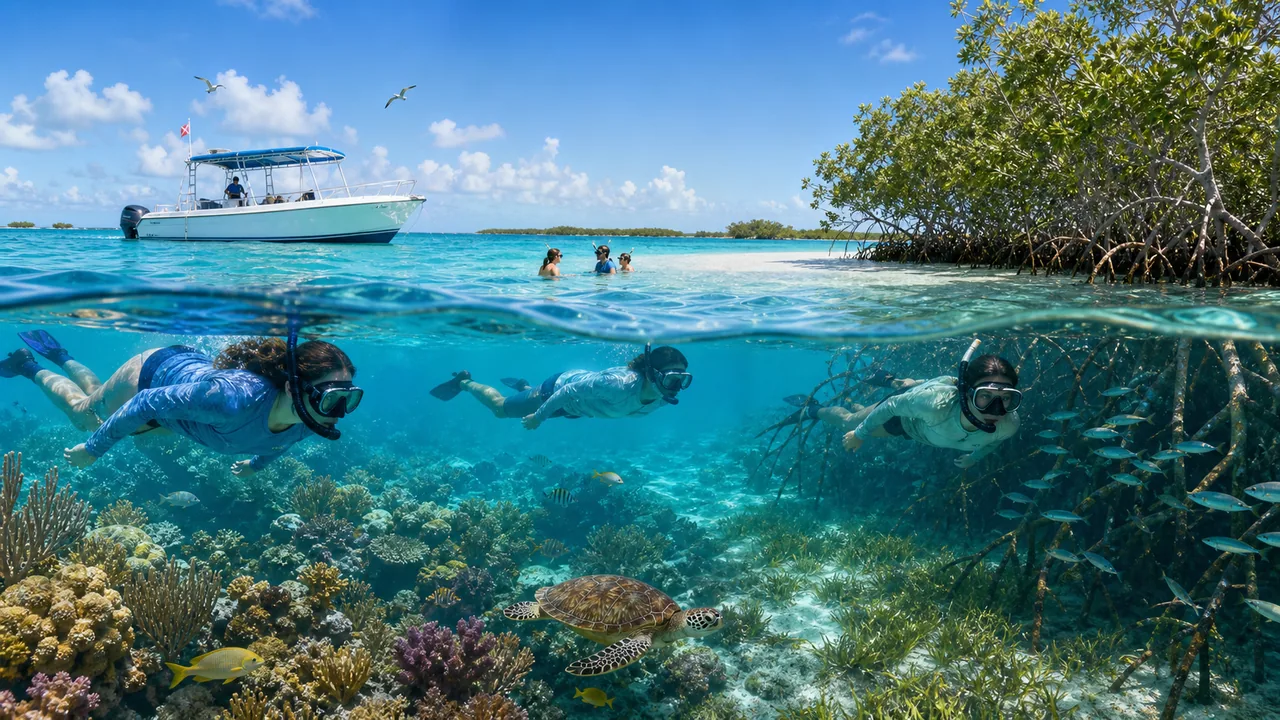
A Key West visitor can buy a “snorkeling tour” and wind up on a reef catamaran, a sail-and-kayak trip, or a sandbar boat. The booking pages place those trips beside one another, but the day on the water is not remotely the same.
Start with one blunt question: did you come to see coral, or would the group rather wade, paddle, and relax? Confident swimmers chasing reef time should favor a dedicated reef departure. A family worried about deep-water entry may have more fun at a sandbar. That choice matters more than the logo on the hull.
Find the right boat
Tell us who is getting in the water
Send the date, group size, weakest swimmer, and whether coral or calm shallow water is the priority. That is enough to narrow the trip before anyone wastes time on the wrong itinerary.
Start with reef, backcountry, or sandbar
Suppose half the family wants to look for fish and the other half dislikes water over its head. A reef ticket does not solve that disagreement. It puts the hesitant swimmers on an open-water boat and gives the confident swimmers the experience they asked for.
For that family, a sandbar or backcountry trip is usually the kinder choice. There may be kayaks, mangroves, and a swim stop, but nobody should sell it as a coral-reef substitute. If the whole group came to snorkel, reverse the decision and take the reef boat.
Where Fury, Sebago, and Danger actually differ
Fury has the broadest menu of the three. Its reef trips and combination adventures share a brand, not an itinerary. The larger catamarans make boarding feel familiar to many first-timers, though the tradeoff is a scheduled commercial trip with more passengers.
Sebago also mixes catamarans and schooners across different products. Read the actual departure name before using a review. Danger Charters occupies the smaller-group lane with daytime sail, kayak, and snorkel trips; guests get more contact with the crew but less deck space, and the smaller boat can feel more active in chop. Its Wind and Wine sunset sail is unrelated to the daytime snorkel experience.
Tour length is not water time
The number in the booking widget is total dock-to-dock duration. Sailing, the safety talk, transit, meals, kayaking, and other activities all come out of it. Fury, for example, says the snorkeling portion of its multi-activity Ultimate Adventure is about 45 to 60 minutes. That is useful context for anyone reading “all day” as several hours with a mask on.
On the phone, use the tour's full name and ask, “How many minutes do guests usually spend snorkeling?” Then ask whether the crew enters the water and whether swimmers are released together. If weather forces a different stop or activity, the reservation agent should be able to say whether the ticket still stands, moves to another date, or becomes a credit.
For beginners, the ladder matters as much as the reef
Included fins do not make a trip beginner-friendly. Look for flotation, a broad boarding ladder, a clear briefing, and a stated policy for guests who choose to remain aboard. Families need the operator's minimum age and an answer to a more important question: must the child swim independently? Confirm that child-size masks are carried rather than assumed.
Mobility questions have to reach beyond the dock. Tell the company whether the concern is stairs, balance, grip strength, transferring into the water, or climbing back aboard when tired. A big catamaran may offer a steadier deck; a smaller boat may allow more direct crew assistance. Neither is automatically the accessible choice.
- Choose a dedicated reef boat when coral viewing outranks every other activity.
- Choose sail-kayak-snorkel when a small group and a varied day matter more than maximum mask time.
- Choose a sandbar eco trip for shallow water, wading, and an easy social pace.
- Choose a multi-activity package when the family would rather sample several activities than specialize in one.
What a bad review actually tells you
Ignore the sunset-sail praise when you are buying a morning reef trip. Search the comments for the actual boat or tour name. Five people describing the same cramped boarding or forty-minute swim says something; five stars for cocktails at dusk does not.
A review that says “we never reached the reef” is incomplete without the weather and the crew's explanation. A sheltered substitute can be the responsible call. The useful complaint says whether guests were warned, what replaced the reef, and whether the company followed its written terms.
Give the reservation desk a choice it can answer
Try: “July 18, two adults and children ages nine and twelve. The nine-year-old swims but has never climbed a boat ladder. We want coral, not a sandbar. Which trip fits?” Add a mobility issue in the same note. A useful reply names the product and describes the ladder.
- Exact tour name and usual vessel
- Passenger limit and normal snorkeling time
- Reef, backcountry, or sandbar as the ordinary plan
- In-water guide and available flotation
- Weather-change, cancellation, and rebooking terms
- Food, towels, wetsuits, parking, and the correct check-in dock
A comfortable boat ride does not guarantee an easy swim
A wind shift can roughen the advertised reef and send the captain to sheltered water. That change is not automatically a bait and switch. The booking terms should say whether the substitute is still sold as the same trip and whether the guest may rebook.
The size of the catamaran matters for the ride, not for eliminating current after entry. A guest who is uneasy beyond standing depth should say that plainly. A sandbar or glass-bottom boat may fit better than a highly rated reef trip.
Pack for salt water, sun, and the correct marina
Do not infer the equipment list from the ticket price. Verify towels, wetsuits, prescription masks, flotation, rinse water, dry storage, food, and drinks. Bring sun-protective clothing, water, and sunscreen that complies with the operator's current guidance. Motion-sensitive travelers should settle a medication plan with a clinician or pharmacist before departure day, not after the boat clears the harbor.
Keep valuables ashore unless they can survive spray and a wet deck. Save the dock name, check-in cutoff, and phone number offline; Key West operators depart from several marinas, and parking can turn a short map distance into a late arrival. Boats generally cannot hold the rest of the manifest for one missing party.
Price the minutes you came to spend in the water
Take a three-hour reef run with roughly an hour in the water and compare it with a six-hour combination trip that also provides roughly an hour. The longer ticket did not buy twice the snorkeling; it bought sailing, food, kayaking, or other activities. That may be a good deal, but only for someone who wants those things. Taxes, parking, photos, equipment, and the number of passengers can change the answer again.
Product names matter when reading reviews. Rough seas describe the day. A crew that never explained the changed destination describes the service. A sandbar guest disappointed by the lack of coral chose the wrong itinerary. Because those are different failures, RealReviews leaves outside ratings attributed to the source instead of manufacturing one house score.
What the reservation agent needs to hear
Try this wording: “We have four people, including a nine-year-old who swims but has never snorkeled from a boat. One adult has trouble with steep ladders. We care more about coral than kayaking. Which exact trip would you put us on?” Add the date and any concern about a rough ride. Save the answer with the cancellation policy.
Make “offshore” mean something
Ask, “How long are we usually under way, and how deep is the water where people enter?” That forces an offshore-reef listing to describe the actual swim. Nearshore mangroves are different scenery and often calmer. A wreck may be deeper and more exposed.
No reservation agent can promise next week's visibility. The agent can identify who chooses the site, who supervises the water, and what the weather clause does with a no-reef departure. “Conditions permitting” is not a complete policy.
For a beginner, the ladder is the revealing question
For a child, establish whether independent swimming is required. For weak knees or grip, get a description or photograph of the return ladder and ask what help the crew provides. “All ages welcome” does not answer either question.
The safety talk should cover the reef itself. Florida Keys National Marine Sanctuary guidance prohibits touching or collecting coral, feeding fish, harassing wildlife, and anchor damage. Hearing those rules before entry is a sign that the crew is protecting the site.
Settle prescription masks, wetsuits, properly fitted flotation, and boarding help ashore. Cold, sun, seasickness, poor vision, and the climb back onto the boat can end a swim before the fish do. A vague equipment answer is reason to choose another boat or a sandbar day.
Compare price against minutes in the water
Start with the checkout total, transportation, likely tip, and any paid wetsuit or prescription mask. Then place the operator's usual water time beside the number. Lunch and drinks add value only to a group that wanted them; an all-day label does not reveal how long anyone snorkels.
A cruise passenger also has to price in risk. Use ship time, allow for the ride from pier to marina and check-in, and leave a generous return margin. An independent excursion may cost less, but the passenger owns a missed-ship problem.
After booking, keep the operator's contact information and check-in instructions offline. Reconfirm the departure point because one company may use several docks. The best-reviewed trip is useless when the party waits at the wrong marina.
Sources and verification
Rules and public requirements link to the responsible agency. Business-specific service claims are checked against privately retained official material, while public ratings remain attributed to their original source. RealReviews does not turn outside reviews into invented testimonials, blend unrelated platforms into a house score, or sell placement in these comparisons. Recheck licenses, availability, scope, and price before hiring.
Frequently asked questions
Is reef snorkeling better than a Key West sandbar tour?
Yes—for coral and fish, reef snorkeling is the better purchase. A sandbar is the better setting for wading, paddleboards, kayaks, and a mixed group that includes nonswimmers. Book the reef when most of the party wants to snorkel in open water; book the sandbar when swimming is optional.
Which Key West snorkeling tour is best for beginners?
Fury and Sebago's large-catamaran reef products are sensible places to start because vessel size, flotation, instruction, and ladder access are easier to compare before booking. Danger Charters fits a beginner who prefers a smaller group and closer crew contact. The deciding detail is the weakest swimmer's comfort in open water, not the lowest fare.
Will I see a specific reef or animal?
No—not as a promise. A turtle may be there and the named reef may be usable; neither can be known before the boat leaves. Buy the trip only if you are comfortable letting the captain choose a responsible stop that day.
What should I ask a Key West snorkel operator before paying?
Ask for the exact tour and vessel, passenger limit, usual water time, minimum swimming ability, ladder style, and whether a guide snorkels with the group. Also settle what happens when weather changes the site. Towels, flotation, food, parking, and any charge beyond the displayed fare belong in the same conversation.
Can weather change a Key West snorkeling trip?
Yes. Wind, waves, current, and visibility can move the boat to another reef or a sheltered backcountry stop. Read the weather clause before paying: it should tell you whether that substitute completes the booking or whether a credit, refund, or new date is available.