
Key West charter comparison
Key West Fishing Charter Reviews: How to Choose the Right Captain
Choose a Key West fishing charter by fishing style, season, boat, group size, catch policy, and captain communication—not a generic five-star score.
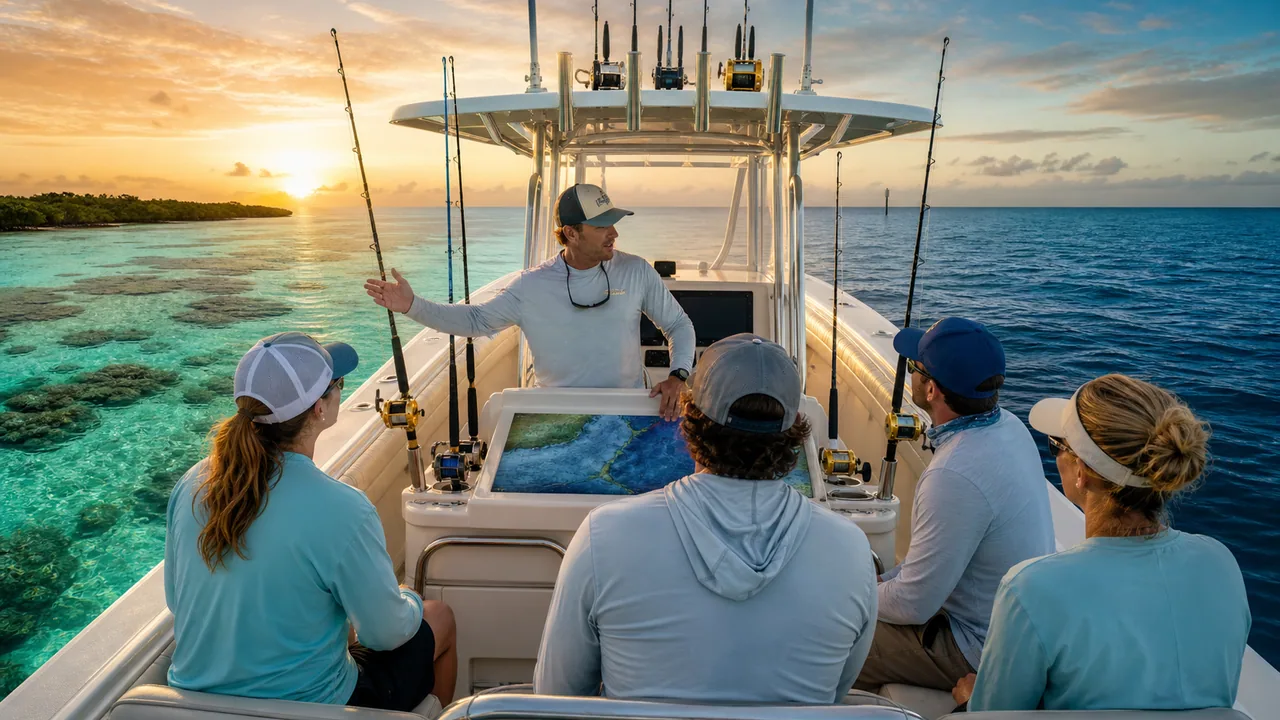
A five-star offshore captain can be the wrong choice for a family that wants calm reef action. A flats guide can be exceptional and still disappoint six friends who expected a large boat and a cooler of snapper. Key West fishing reviews only become useful after the trip type is defined.
Before paying a deposit, settle the fishing style, target species, run time, passenger count, boat, tackle, licenses, catch policy, weather call, cancellation terms, and physical needs. Catching is never guaranteed; preparation, honest communication, boat condition, and the captain's decisions are the parts a customer can actually compare.
A useful charter request
Send species, date, experience, and group size together
Those four facts let a captain recommend a trip instead of guessing from “I want to fish.”
Start with the six people, not the captain
Picture the group before comparing boats. Six friends want to leave Key West together, two have never fished, one is uneasy in open water, and everyone expects a turn on a rod. That description rules out some otherwise excellent charters. A flats skiff is made for very shallow water and a tiny party. An offshore boat may give the group more room but spend much of a half day running before the first line goes out. Reef and wreck trips usually trade range for more fishing time near structure. Backcountry guides work channels and protected water. A headboat sells places along a shared rail; a split charter divides a smaller boat among customers who may not know one another.
For this group, a review becomes useful only after it identifies the boat and trip. Praise from a solo fly angler says little about seating or rod time for six adults. A family account is closer if it describes a short run, beginner instruction, and light tackle. The experienced offshore crew should read reports tied to the range, tackle class, sea conditions, and backup target it expects to buy.
Private is not shorthand for offshore, nonstop action, or a full cooler. It means the group controls the booked pace. A private reef trip, a flats skiff, and a private offshore run can all earn excellent reviews while solving different problems.
The confirmation needs a boat, a clock, and a final charge
Here is the difference between a reservation and a label. The label says four-hour private charter. The reservation says which captain, which vessel, which dock, when the group boards, when it returns, what fishery is planned, how many passengers are accepted, and what the customer should expect to pay. It also answers whether the four hours run dock to dock. On a half-day offshore booking, that last answer changes the amount of time available to fish.
Suppose the named vessel develops a problem. The company offers another boat with the same legal passenger capacity. That alone does not make the substitute comparable. The six-person party may have chosen a cabin, shade, toilet, deck layout, or boarding route. The written substitution term should carry those features forward or let the customer choose another date.
One six-person inquiry came back with “gear included.” That was not enough. Two guests needed crew-rigged conventional rods; another wanted to bring a fly rod. The useful follow-up identified the supplied tackle, bait charge, casting room, and storage for the personal rod. Had bait been extra—or unavailable—the price and even the trip choice would have changed.
The next answers were blunt: six legal passengers, but fewer people fishing at once; seats available while running; shade and toilet confirmed; dock step described. That was the information the children and the guest with limited mobility needed. The captain described the open-water ride. Seasickness medication remained a question for the guest and clinician.
For the dock, the group kept one text: marina and street address, slip and boat name, gate code or parking direction, arrival time, and the walk from the lot. It also settled restroom access and help with the gear. “Meet at the marina” was deleted.
That level of detail is not fussy at 5:45 in the morning. A street address can lead to the wrong marina entrance, while a boat name without a slip leaves guests searching dark docks. Parking may sit outside a gate. The vessel may be a walk from the restroom. Someone carrying a cooler or helping a child needs to know this before the captain starts the clock. A dropped map pin helps, but it does not replace the written dock and vessel names if the pin opens badly.
The price note had three columns—inside the charge, extra, unknown—for fuel, dock fees, tax, bait, tackle, ice, license coverage, cleaning, and gratuity. Below it: cooler, food, alcohol, footwear, rain gear, and storage rules. Headboat seats stayed out of that comparison; those buy places in a shared trip, not control of a private party, pace, and target.
Save the weather message
“Offshore is out tomorrow. Protected water is available.” For a family flying home the next day, that 4:40 p.m. text could rescue the outing. It could not silently replace the offshore charter. The reply still had to say: take the new trip, move the date, use credit, or follow the written refund term.
An operator cannot promise next week's sea. It can say when the captain normally calls the trip, whether the notice comes by phone or email, and what happens after a missed call. Afternoon notice may leave time to change a ride or childcare. Dockside notice usually does not.
If the group cannot be reached, the reservation should already say whether the boat waits, the booking moves, or the ordinary no-show term applies. Otherwise the first conversation about money happens after the weather decision, when both sides are already frustrated.
The policy needs separate entries for a guest cancellation, captain cancellation, disabled boat, and illness-driven early return. Each entry records who stopped the trip, how much ran, and what happened to the payment. Refund, credit, reschedule, and charge are not synonyms.
A traveler who hates long open-water runs may simply prefer backcountry fishing. Put that in the first message. Ask a clinician—not the captain—for medical advice.
Separate a slow bite from a badly run trip
Review one: no fish, named boat, working tackle, safety talk, help for beginners, and a move after the first plan failed. Review two: no fish, unexplained substitute boat, promised bait missing, early return, added fee. The empty cooler is the same. The service is not.
Fish do not answer to a five-star scale. Season, water temperature, migration, bait, wind, target, angler skill, and luck affect the bite. Preparation, sound equipment, instruction, effort, tactics, safety, and communication belong to the captain. Ask about recent conditions and a fallback target; treat a guaranteed species or catch as marketing, not a dependable term.
A pattern must match the product. Keep the trip date, captain, vessel, and charter type beside each account. A complaint about a crowded headboat says nothing about a private flats skiff. Praise written years ago may concern a captain who no longer works there. Repeated surprise fees on comparable private trips deserve more weight than one angry report about the catch.
Owner replies can add missing dates and documents. “The original boat entered repair on Tuesday; we sent a substitution notice that afternoon” can be checked against the customer's account. “Sorry you were disappointed” cannot. A reply does not cancel a review. It shows what the operator disputes and, sometimes, names a new procedure.
Use the overall rating to find the accounts, then read them. If an older review attacks a cancellation or substitution term, place that report beside the term offered today. The new term controls the booking now. The old account still describes the earlier transaction.
A charter license does not settle the fish rules
Florida's Fish and Wildlife Conservation Commission says paying passengers are generally covered while aboard a properly licensed saltwater charter operation. That passenger coverage is useful, but narrow. It does not erase size and bag limits, closed seasons, protected-species rules, federal requirements, or the captain's decision to release a legal fish. Someone fishing from shore or from an unlicensed private boat is in a different licensing position.
If dinner matters, say so before choosing the trip. The likely fishery can then be checked against the rules for the actual date. On the boat, the crew should identify and measure catch. The reservation can state whether cleaning is included and what cold storage is available after cleaning. A restaurant's willingness to prepare customer catch is a current arrangement to confirm directly; it is not a permanent benefit included with every charter.
Federal waters and highly migratory species may add permits and rules beyond Florida's recreational pages. The captain applies the current rule on the water. Guests should never pressure a crew to retain a closed, protected, undersized, or over-limit fish. For a release, careful handling and little air exposure matter more than another photograph.
The plan continues after docking. Cleaning style, packaging, ice or refrigeration, transportation, and the restaurant's current acceptance policy determine whether a keep-fish trip produces dinner. A release trip can still be reviewed for identification, handling, instruction, and respect for the fishery. Neither outcome should be advertised as guaranteed.
Send the details that can change the boat
A workable request can be short. Give the date, preferred duration, party size and ages, fishing experience, desired fishery, mobility needs, motion-sickness concerns, and willingness to run offshore. Add whether the group hopes to keep legal fish, needs shade or a toilet, and expects everyone to fish at once. If protected water is an acceptable weather alternative, say that too.
The best reply may redirect the group. It should name a suitable boat, offer a realistic plan, distinguish recent conditions from a promise, state the complete expected price, and answer the weather and cancellation questions. A specialist who recommends a different vessel is paying attention to fit; the redirection is not evidence that either operator is inferior.
Keep that reply with the booking. A later review can identify the product, date, captain, vessel, group, approximate conditions, route change, instruction, boat condition, charges, and policy outcome. Catch belongs in the account with its target and kept-or-released context. One day's result is not a permanent catch average.
No boat name or return time? Put that quote in the hold pile. Book it only after the blanks are filled; otherwise compare the complete offer from another operator.
Sources and verification
Rules and public requirements link to the responsible agency. Business-specific service claims are checked against privately retained official material, while public ratings remain attributed to their original source. RealReviews does not turn outside reviews into invented testimonials, blend unrelated platforms into a house score, or sell placement in these comparisons. Recheck licenses, availability, scope, and price before hiring.